HostPeppy high performance hosting is built for growing websites that need better speed, higher resources, and stable performance. Perfect upgrade from shared hosting without the complexity of VPS.
 Higher CPU & RAM Allocation
NVMe SSD Storage for Speed
Resources for Better Stability
Manage with cPanel Controls
Higher CPU & RAM Allocation
NVMe SSD Storage for Speed
Resources for Better Stability
Manage with cPanel Controls
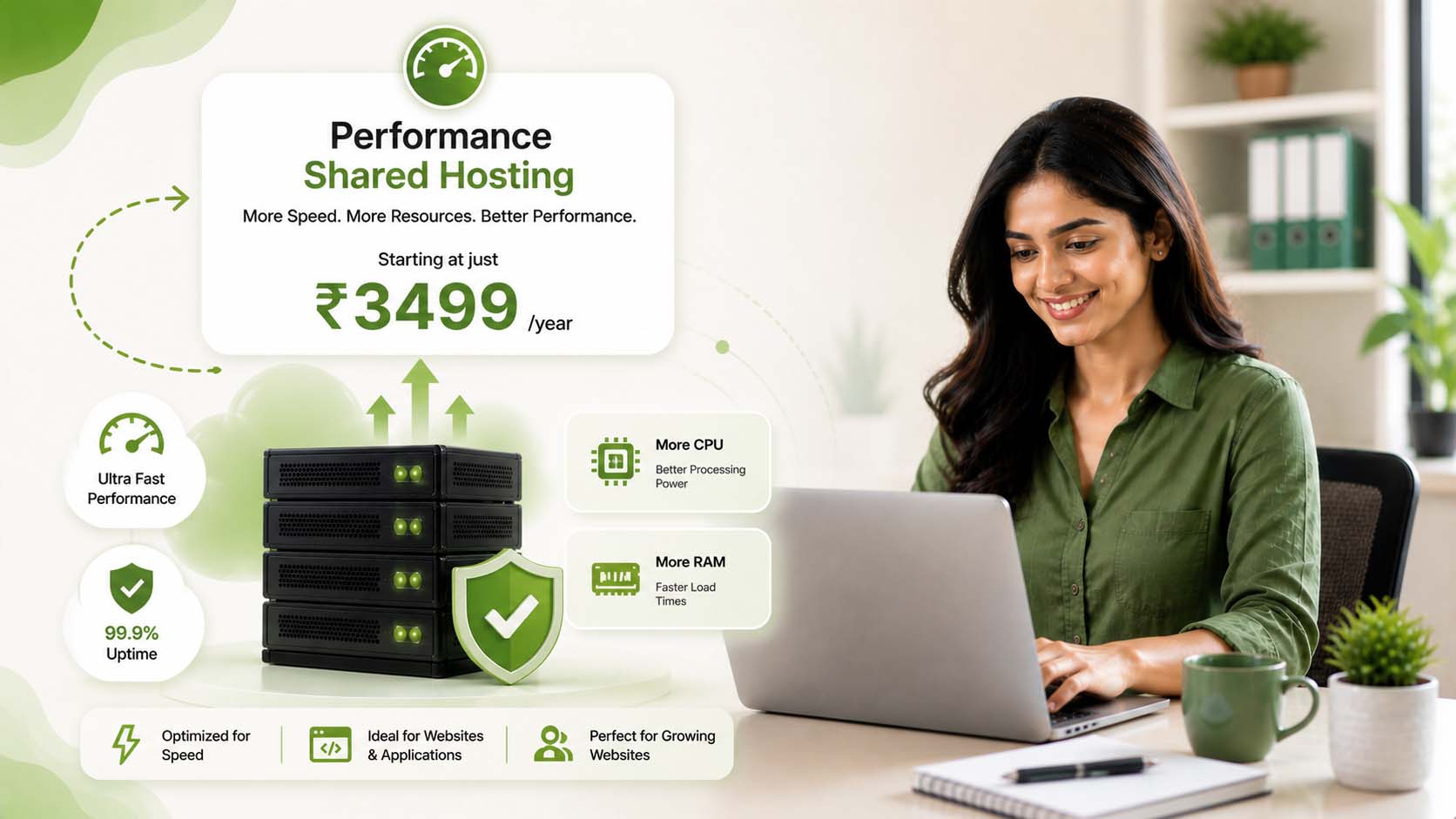
Buy the cheapest performance hosting plans built for speed with NVMe SSD, extra RAM, CPU & LiteSpeed for optimal website and app performance.
RENEW @ Rs 3499/ YEAR
RENEW @ Rs 4499/ YEAR
RENEW @ Rs 5499/ YEAR
Upgrading your hosting shouldn’t slow you down. Our team handles the complete migration — including files, databases, emails, and settings — so your website runs smoothly on our high performance servers.
Sign up with HostPeppy and share your current hosting access — cPanel login, admin panel, or basic credentials. No technical work required from your side.
Our team securely moves your website data, databases, and emails. We set up your website on our high performance environment and test everything before going live.
Once everything is verified, we update your domain settings and make your website live. Your visitors won’t notice any downtime during the transition.
Regular shared hosting chokes under pressure. VPS is too complex. You need the sweet spot — Performance Hosting. VPS-grade power with shared hosting simplicity.
Why choose between weak shared hosting and complex VPS? Get dedicated-grade resources (up to 3 CPU cores, 8GB RAM) with your familiar cPanel + 1-click installers. Zero server management. Zero technical headaches.
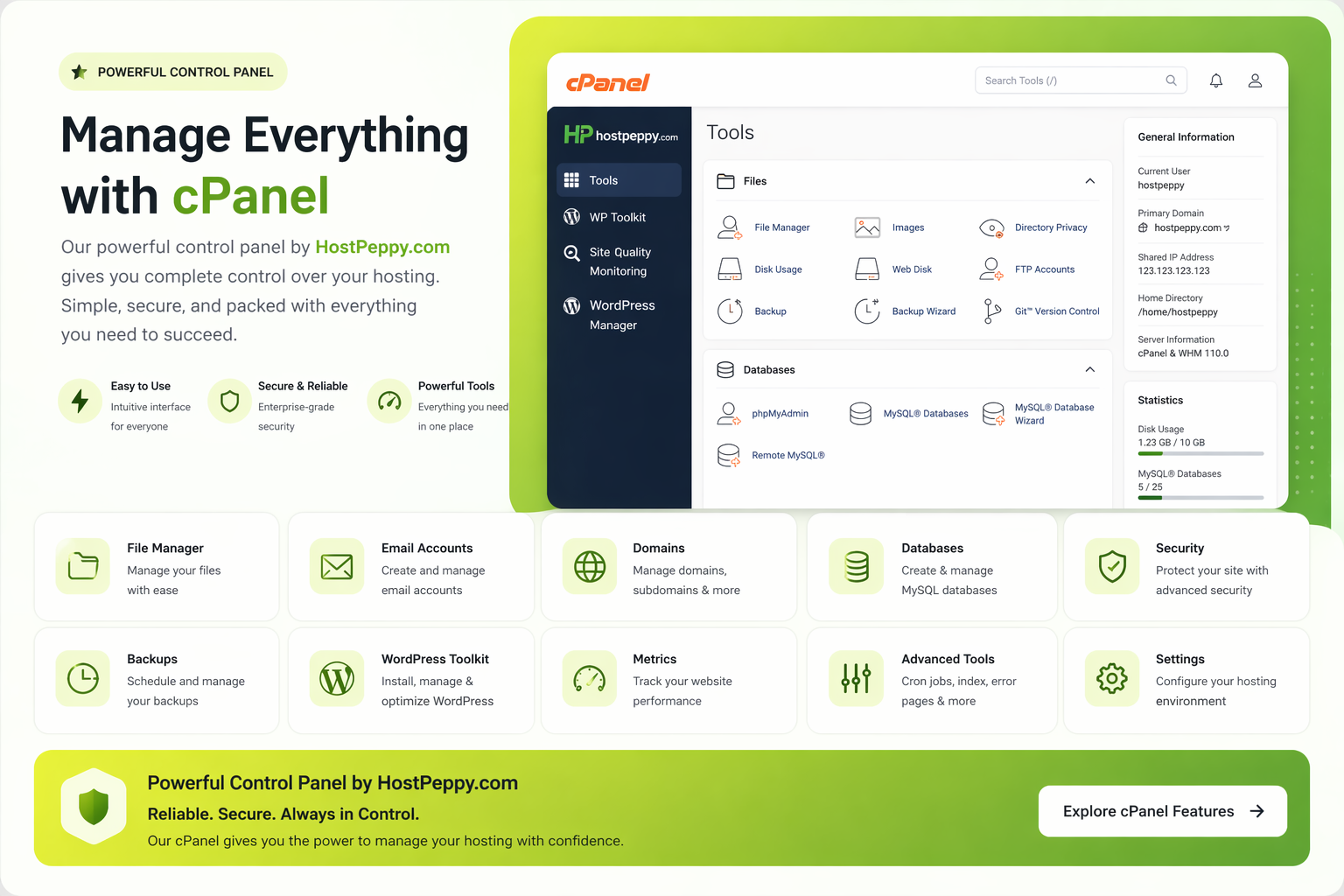
Take control of your hosting with cPanel. From managing files and databases to configuring your Node.js applications, everything is accessible through a clean and structured interface — with no unnecessary complexity.
Simple and clear answers to help you understand nodejs web hosting plans before choosing the right one.
High performance hosting is designed for websites that have outgrown basic shared hosting but are not ready to move to VPS or dedicated servers. It sits right in the middle — offering better speed, more resources, and improved stability without adding complexity.
In traditional shared hosting, multiple websites share the same pool of CPU, RAM, and server resources. This works fine for small websites, but as traffic increases or your website becomes more dynamic, performance can drop. Slow loading times, occasional downtime, and limited resources are common issues.
High performance hosting solves this by allocating more resources per user and reducing server congestion. You get better CPU power, higher RAM limits, and often isolated environments so your website is not affected by others on the same server.
Unlike VPS hosting, you don’t need to manage the server, install control panels, or handle technical configurations. Everything is pre-managed and optimized, making it a practical solution for business owners, growing websites, and eCommerce stores.
In simple terms, high performance hosting in India gives you the power and stability your website needs as it grows, without the technical burden that comes with VPS hosting.
High performance hosting is ideal for users who need more power than shared hosting but don’t want the complexity of VPS management. This includes business websites, growing blogs, WooCommerce stores, and service-based websites that are starting to get consistent traffic.
Many users consider VPS when their website slows down, but VPS comes with additional responsibilities. You may need to configure the server, manage updates, handle security, and sometimes even troubleshoot issues manually.
With high performance hosting, all of that is handled for you. You get a managed environment with better resources, improved speed, and stable performance without worrying about backend management.
It is especially useful for people who want a “plug-and-play” solution. You focus on your website or business, while the hosting provider manages the technical side.
If you are not comfortable handling server-level configurations but still want a powerful hosting environment, this is the best middle-ground option between shared hosting and VPS.
Yes, high performance hosting significantly improves website speed compared to basic shared hosting. This is mainly because of better resource allocation and optimized server environments.
When your website runs on shared hosting, it competes with many other websites for CPU and memory. If one site uses more resources, others may experience slowdowns. High performance hosting reduces this problem by allocating more dedicated resources to your account.
Many providers also use faster storage systems like NVMe SSD, which improves data access speed and reduces load time. Combined with better server optimization, this results in faster page loading and smoother performance.
Website speed is not just about user experience — it also impacts SEO. Faster websites tend to rank better in search engines and retain visitors longer.
For growing websites, upgrading to high performance hosting in India is often the simplest way to achieve noticeable speed improvements without changing your website structure.
Yes, high performance hosting is specifically designed for business websites that require stability, speed, and consistent uptime. Whether you run a service website, an online store, or a content-driven platform, performance plays a key role in user experience and conversions.
Business websites often deal with more visitors, larger databases, and dynamic content. Basic shared hosting may struggle under such conditions, leading to slow loading times or downtime during peak traffic.
High performance hosting provides a more stable environment with higher resource limits, ensuring your website can handle increased demand without performance issues.
Another advantage is reliability. Businesses cannot afford frequent downtime or slow pages, as it directly impacts revenue and user trust.
In short, if your website is important for your business growth, upgrading to a powerful shared hosting solution is a practical and cost-effective decision.
No, affordable high performance hosting does not mean lower quality. Pricing often depends on how efficiently the hosting provider manages infrastructure and resources.
Modern hosting companies optimize server environments to deliver better performance at lower costs. This allows users to access powerful hosting without paying premium prices.
The core features — such as higher CPU limits, increased RAM, faster storage, and improved stability — remain available even in cost-effective plans.
The main difference between plans usually lies in scalability and advanced features, not basic performance.
So, cheap high performance hosting in India is more about value for money rather than compromised quality.
Yes, upgrading from shared hosting to high performance hosting is usually a smooth process. Most hosting providers handle the migration and setup, so you don’t have to worry about technical details.
The transition involves moving your website files, databases, and configurations to a more powerful environment. This is done carefully to ensure minimal or no downtime.
For users, the process is simple. You just choose the upgraded plan, and the hosting provider takes care of the rest.
Once upgraded, your website immediately benefits from better speed, improved stability, and higher resource availability.
This makes high performance hosting an ideal next step for websites that are growing but not yet ready for VPS hosting.
High performance hosting and VPS hosting both offer better performance than basic shared hosting, but they are designed for different types of users. High performance hosting is a managed environment where you get increased resources like CPU and RAM without needing to handle server management.
VPS hosting, on the other hand, gives you a virtual server where you have full control. While this sounds powerful, it also means you are responsible for setup, configuration, updates, and security unless you opt for a managed VPS.
For many users, especially business owners, this becomes overwhelming. High performance hosting solves this problem by offering better speed and stability while keeping everything simple and managed.
If you want performance without technical responsibility, high performance hosting is the better choice. VPS is more suitable for developers or advanced users who need complete control.
Yes, one of the main reasons people switch to high performance hosting is to handle increased traffic more effectively. As your website grows, the number of visitors, database requests, and server load also increases.
Basic shared hosting may struggle during traffic spikes, causing slow loading times or even temporary downtime. High performance hosting addresses this by providing more resources and a more stable environment.
With better CPU allocation, higher RAM limits, and optimized server configurations, your website can handle more users at the same time without slowing down.
This is especially useful for business websites, eCommerce stores, and content platforms that experience regular or seasonal traffic growth.
In simple terms, upgrading to high performance hosting ensures your website stays fast and responsive even as traffic increases.
No, you do not need advanced technical knowledge to use high performance hosting. This is one of its biggest advantages compared to VPS hosting.
The hosting environment is fully managed, which means the provider takes care of server setup, maintenance, and optimization. You get access to a control panel like cPanel where you can manage your website easily.
Tasks like uploading files, managing databases, creating emails, or installing applications can be done through a simple interface without coding knowledge.
This makes high performance hosting a great option for business owners, bloggers, and website managers who want better performance without dealing with technical complexities.
If you ever need help, support teams are usually available to assist with setup and troubleshooting.
Yes, high performance hosting is a strong choice for eCommerce websites because it offers the speed and stability required for online transactions. Online stores often involve dynamic content, user sessions, payment processing, and database interactions, all of which require reliable performance.
Slow loading times can lead to lost sales and poor user experience. High performance hosting reduces this risk by providing faster servers and better resource allocation.
It also helps maintain consistent uptime, which is critical for businesses that operate 24/7. Even during peak traffic periods, your website remains accessible and responsive.
For small to medium eCommerce stores, this type of hosting offers the right balance between cost and performance.
If your store continues to grow significantly, you can later upgrade to VPS or dedicated hosting, but high performance hosting is often the ideal starting point.
High performance hosting is best suited for websites that have moved beyond the basic stage and require better speed and reliability. This includes business websites, blogs with growing traffic, eCommerce stores, and service-based platforms.
If your website has started experiencing slow loading times, performance drops during peak traffic, or limitations due to shared resources, it is a clear sign that you need an upgrade.
It is also useful for websites running multiple plugins, heavy themes, or large databases, as these require more processing power.
In short, any website that needs stable performance and room to grow can benefit from high performance hosting in India.
Yes, high performance hosting can be a reliable long-term solution for many websites, especially those in the small to medium growth stage. It provides enough resources and stability to handle ongoing traffic and business needs.
For many users, this type of hosting offers the perfect balance between cost and performance. You get a powerful hosting environment without the need to manage servers or deal with technical complexity.
However, if your website grows to a very large scale with extremely high traffic or custom requirements, you may eventually consider upgrading to VPS or dedicated hosting.
Until then, high performance hosting remains a practical and efficient solution that can support your website for a long time.
Yes, high performance hosting works very well for WordPress websites, especially when your site starts growing beyond basic usage. Many WordPress websites begin on standard shared hosting, but over time they add plugins, themes, and content that increase server load.
This is where high performance hosting becomes useful. It provides better CPU, more RAM, and faster storage, which helps WordPress websites load faster and handle more visitors at the same time.
It is particularly beneficial for blogs with high traffic, business websites, and WooCommerce stores where speed directly impacts user experience and conversions.
Another advantage is stability. With more resources and reduced server congestion, your website remains responsive even during traffic spikes.
If your WordPress site feels slow or limited on shared hosting, upgrading to high performance hosting in India is often the most practical next step.
Yes, high performance hosting generally offers better uptime compared to basic shared hosting. Since resources are better allocated and servers are less crowded, your website is less likely to face performance interruptions.
On standard shared hosting, if other websites on the same server consume too many resources, your website may slow down or even go offline temporarily. High performance hosting reduces this risk by isolating resources more effectively.
This improved stability ensures your website remains accessible to users consistently, which is especially important for business websites and online stores.
While no hosting solution can guarantee 100% uptime, high performance hosting provides a much more reliable environment.
For websites that depend on continuous availability, this upgrade can make a noticeable difference.
Yes, most high performance hosting plans allow you to host multiple websites under a single account. This is especially useful for business owners, agencies, or individuals managing more than one project.
With increased resources compared to standard shared hosting, you can run multiple websites without facing major performance issues.
Each website can have its own domain, database, and files, all managed from a single control panel like cPanel.
However, it is important to ensure that your plan has sufficient resources to handle the combined traffic and usage of all websites.
For users managing multiple websites, high performance hosting provides both flexibility and efficiency.
Managing high performance hosting is simple and does not require advanced technical skills. Most hosting providers offer user-friendly control panels like cPanel, which allow you to manage everything from one place.
You can upload files, create databases, manage domains, and handle emails without needing to use command-line tools.
At the same time, the hosting environment is optimized for performance in the background, so you do not have to worry about server-level configurations.
This balance between simplicity and power is what makes high performance hosting attractive for both beginners and experienced users.
You get the benefits of a powerful hosting setup without the complexity of managing a server manually.
Yes, upgrading from high performance hosting to VPS hosting is usually straightforward. As your website grows and requires more control or dedicated resources, you can move to a VPS environment.
The advantage of starting with high performance hosting is that it allows you to grow gradually without jumping directly into a complex setup.
When you are ready to upgrade, most hosting providers assist with migration to ensure a smooth transition.
This makes high performance hosting a flexible option that supports your website’s growth over time.
You can start simple and move to advanced hosting only when it is actually needed.
Staying on basic shared hosting may work for small or new websites, but as your site grows, limitations become more noticeable. Slow loading speeds, limited resources, and inconsistent performance can affect both user experience and search rankings.
High performance hosting offers a clear upgrade path by providing better speed, higher resource limits, and improved stability.
It allows your website to handle more traffic and perform consistently without requiring technical expertise.
For businesses and growing websites, this upgrade is often necessary to maintain performance and support future growth.
In simple terms, high performance hosting helps you move forward without jumping directly into VPS complexity.